
SUpporting Women in Forestry (Swift)

SWIFT is a group of women, non-binary people, and allies in the School of Forest Resources and the Department of Wildlife, Fisheries, and Conservation Biology committed to advancing opportunities for women and gender minorities in the field of forestry. Our goal is to host practical, positive, solution-focused meetings that provide formal and informal support. Ultimately, we are fostering a community atmosphere that can serve to encourage and empower women and gender minorities in forestry and wildlife to succeed.
Our Meetings

We have regular SWIFT meetings, open to all women and gender minorities in the SFR and WFCB – undergrads, graduate students, researchers, staff, and faculty – and SWIFT + Allies events open to everyone in the SFR and WFCB to discuss relevant topics, hear from guest speakers, and provide a safe place to learn and grow. Our goal is to provide a mix of time to socialize and get to know each other, learn new concepts through seminars, offer brainstorming sessions that allow us to develop strategies, and time in the field to explore what we all love best – forestry! Check out the UMaine SFR/SAF Instagram page for SWIFT event updates and photos!
Spring 2026
Maple Sugaring Event with M.S. Student in SFR Isabella Sferra, Sunday March. 8
Past Fall 2024 Events:
Perspectives on Gender in Natural Resource Professions, with guests Ches Gundrum, Kelby Houtz, Skylar Roach, & Carolyn Zeigra. Thursday November. 2024
Past Spring 2025 Events:
Bird Hike at Piney Knoll Conservation Area with Rachel Darling, Saturday May. 3
Appalachian Mountain Club Silviculture Field Tour with AMC Research Forester, Caolyn Zeigra and AMC LAnds PLanner, Kristin Peet. Saturday, February. 22
Past Fall 2025 Events:
Annual SWIFT Led Chainsaw Practice, Sunday November. 9
Past Spring 2026 Events:
Beaver Trapping Workshop with Trapper and Biologist Kelby Houtz, Saturday January. 31
The mission of SWIFT is to support and encourage women and non-binary people in the School of Forest Resources (SFR) in their forestry education and careers. We aim to provide mentoring and support to better retain women and non-binary people in forestry at all educational levels and ensure successful transitions to the workplace.
We use the following evidence-based approaches as means to achieving this:
- educating our community about terms, concepts, and current research on gender discrimination;
- developing strategies for success in a field dominated by men;
- improving networking for women and non-binary people; and
- providing education, discussion, and opportunities for and about allies.
These approaches are intended to help overcome existing barriers (1 and 2) and build a more accepting community and climate across SFR (3 and 4).
- Gender bias and discrimination are realities in our field
- Current research and literature are essential in understanding bias
- Women and non-binary people have agency and voice in dealing with bias and discrimination
- Woman- and non-binary-only events are necessary to foster safe and open communication
In 2015, a group of faculty and graduate students in the School of Forest Resources formed SWIFT: Supporting Women in Forestry Today, as one way to address the challenges we might face as women and gender minorities in forestry. The original planning team consisted of faculty members Jessica Leahy, Laura Kenefic, and Mindy Crandall, and graduate students Kara Costanza, Karin Bothwell, and Erin Schlager.
There is no formal membership in SWIFT. SWIFT consists of a series of events (roughly 3-4 per semester) that further our mission. The current Planning Team plans and implements these events, which are open to all women and non-binary people in SFR, or the entire SFR community (SWIFT+Allies events).


Beaver Trapping Workshop with Trapper and Biologist Kelby Houtz, Saturday January. 31, 2026
Planning Team
The SWIFT Planning Team (PT) is an all-volunteer group of seven consisting of two undergraduate students, two graduate students, and three faculty/staff. The PT operates on a consensus basis with no formal hierarchy roles, apart from a designated communications coordinator. All PT members plan and facilitate at least one event a semester and prioritize attending SWIFT events.
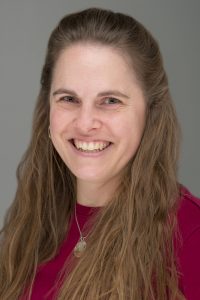
I am Associate Professor of Forest Wildlife Management with a research focus on
understanding how to conserve declining forest wildlife species and better manage
their habitats. I enjoy nature photography, native plant restoration, and exploring Maine’s forests
and trails with my dog.
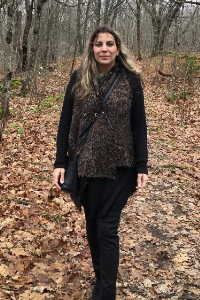
I am Associate Professor of Remote Sensing of Natural Resources at the School of Forest Resources. I enjoy hiking, reading, cooking and singing.

I am an associate professor of sustainable bioenergy systems. I enjoy hiking, crocheting, and embroidering.
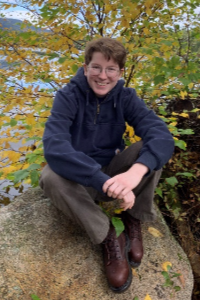
I am a third-year undergraduate student in Forestry with a minor in Ecology & Environmental Science. I enjoy reading, hiking, and all things forestry.
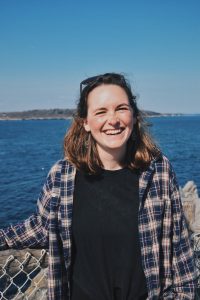
I am a PhD student in Forest Resources studying coastal spruce forest ecology. I enjoy teaching tree ID and looking at tree rings.
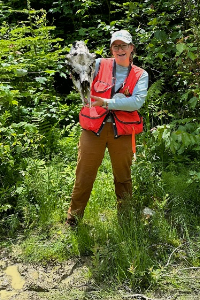
I am an undergraduate transfer student and senior in Forestry. I enjoy all things outdoors, plant ID and ceramics!
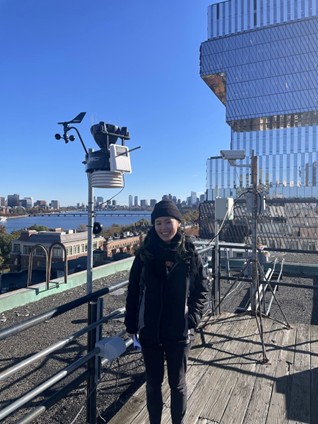
I am a MSc student in the School of Forest Resources studying the impacts of prescribed fire on forest carbon and nitrogen cycling. I enjoy working with soil, plant ID, and painting!
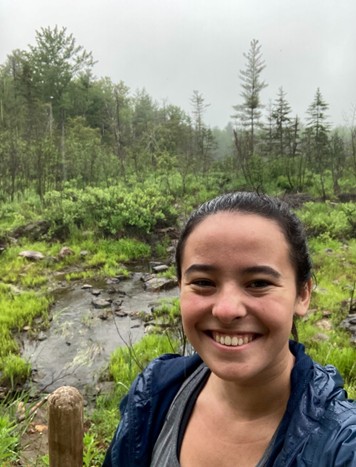
I am a second year EES and SFR Double major. I previously worked with the Cooperative Forestry Research Unit at UMaine and I love getting outside running, hiking, and backpacking.

I am a graduate student getting my M.Sc. in Forest Resources focusing on the long term trends of irregular shelterwood systems. I love hiking, skiing, and crafting!
Ground RUles
Publications
Society of American Forester Presentation on SWIFT
Dr. Mindy Crandall, former Planning Team member, presented on SWIFT at the 2020 Society of American Foresters Annual Meeting. This presentation, “Building and Retaining Gender Diversity in University Forestry Programs: A Case Study of SWIFT” by Mindy S Crandall, Kara K L Costanza, Jenna M Zukswert, Laura S Kenefic, and Jessica E Leahy, can be found in the SAF Journal of Forestry.
Peer Reviewed Journal Article About SWIFT Published
The Journal of Forestry has published an article about SWIFT written by current and former Planning Team members. This article describes the motivation behind SWIFT, the adaptive management approach to operating SWIFT, the goals of SWIFT, and the outcomes as assessed in two participant surveys. SWIFT guidelines and example activities are presented as a model for others who want to organize a similar effort at their own institution. This article, “An Adaptive and Evidence-Based Approach to Building and Retaining Gender Diversity within a University Forestry Education Program: A Case Study of SWIFT” by Mindy S Crandall, Kara K L Costanza, Jenna M Zukswert, Laura S Kenefic, and Jessica E Leahy, will also be made available online at the U.S. Forest Service’s Treesearch website.
Forestry Source Article about SWIFT published
SWIFT was highlighted in a front-page article by Andrea Watts, January 2017 issue of The Forestry Source, the monthly newsletter of the Society of American Foresters (SAF)
Students place second in Presentation on SWIFT
Karin Bothwell and Erin Schlager received 2nd Place in oral presentations for their talk, “Supporting Women in Forestry Today: Small-Scale Discussions with Large-Scale Implications” at the SAF National Convention in Madison, Wisconsin, November 2016.
Resources
LEANING IN TO THE JOB MARKET
Tips and Strategies from previous SWIFT events
NETWORKING
- Build a virtual network
- Become part of online groups
- e.g., Facebook: Women in Wood
- Sit at a table with people you don’t know when at a meeting or conference
- Keep in touch with former employers
- Before going to a conference, look at the professional webpages of speakers, then approach them after their talk with questions and mention that you are aware of their work
- Find commonalities with people you’re talking with
- Ask people questions about themselves
APPLYING FOR JOBS/INTERVIEWING
- Pay attention to what the job is asking for, rather than what they list as requirements, and assess whether you think you would be able to do the job as listed
- Apply anyway, even if you do not think you are fully qualified – the worst that could happen is that they tell you that you are not qualified
- Consider skills that you could bring with you to the job and make sure to communicate that
- Know whom you are competing with and how you stack up in relation to them. Ask yourself what you bring that is unique and sets you apart
- Remember that employers are paying attention to how you interact with others and work with others
- Bring you and your unique attributes to the job
- Be open and honest about yourself – do not just present what they are looking for in the job description. Some applicants bring skills that employers were not considering yet see value in having in an employee
- Recognize that even if you do not have the exact experiences or skills they list, you may have similar experiences or skills that would be worth sharing
- Pay attention to detail when submitting resumes or cover letters. Have someone else look it over before you send it in. Save your materials as a PDF, so everyone can open them, and change the file name to make it clear it’s yours. The more you can do to make things easier for your employer, the better
- Consider getting references from professors, not just past managers from jobs
- Do not add extra materials to your application
NEGOTIATION
- Consider coming back with a counter offer if you believe your work is more valuable and there is flexibility in starting salary
- Double check the range of salaries that would be expected in this job
- Call the Human Resources office to check with them about the salary and range expected for this job
- Visit census.gov to look up cost of living in your area to help
- Ask your network for advice on what is considered reasonable
- Make a good argument for why you should deserve a raise
- Consider negotiating things that are not salary (e.g., vacation time, professional development opportunities)
- Ask men and others in your field what they are being offered
- Ask for more time to decide if needed. This will give you time to research salaries and decide whether to negotiate, and time to craft your reasoning if you do
- When crafting an explanation, remember that employers are considering how beneficial you are as an employee. Explanations just related to your needs (e.g., wage is not livable) are not likely to be convincing
WORK ATTIRE
- Make sure that what you are wearing is functional
- Whether casual or professional, appropriate attire largely depends on the context
- e.g., what meeting it is and what your role is in that meeting
- Be mindful of the context and the message your sending with what you are wearing
- Feel free to ask what to wear if you are unsure
- Above all, wear what makes you feel comfortable!
PARTING THOUGHTS
- Take advantage of informal networking opportunities and social opportunities with your coworkers. Ask to join others in social activities instead of waiting to be approached if you’d like to join them
- With all career advice, take the advice that resonates with you and speaks to you, and do not take advice if it does not feel right to you
- Trust yourself and your instincts!
HOW TO BE AN ALLY
- Recognize bias
- Be proactive
- Provide support from below (i.e., authority figures are not the only ones who can make a difference)
- Use questions to guide potentially confrontational conversations (e.g., “What did you mean when you said… ?” “Have you noticed that…?”)
- Call out bias or sexism when you see it
- Listen and strive to empathize with those who have experienced bias
- Ask what you can do to be supportive
- Amplify suggestions and and contributions made by others who are not getting the attention and recognition they deserve
- Provide opportunities for women and non-binary to build confidence
- Encourage women and non-binary people to pursue opportunities and follow up with them
USEFUL LINKS
7 Ways to be a Better Ally: https://www.upworthy.com/7-ways-to-be-a-better-ally-in-2018
Guide to Allyship: http://www.guidetoallyship.com/
Implicit Bias in Science: http://www.pnas.org/content/early/2012/09/14/1211286109/tab-article-info
Confidence Gap: https://www.theatlantic.com/magazine/archive/2014/05/the-confidence-gap/359815/
Imposter Syndrome: https://www.forbes.com/sites/ashleystahl/20 17/12/10/feel-like-a-fraud-heres-how-to-overcome-imposter-syndrome/#7edc4e34d31c
5 Tips for Being a Proactive Ally: https://everydayfeminism.com/2014/12/tips-for-proactive-ally/
Social Justice Terminology, Suffolk University: https://www.suffolk.edu/campuslife/27883.php